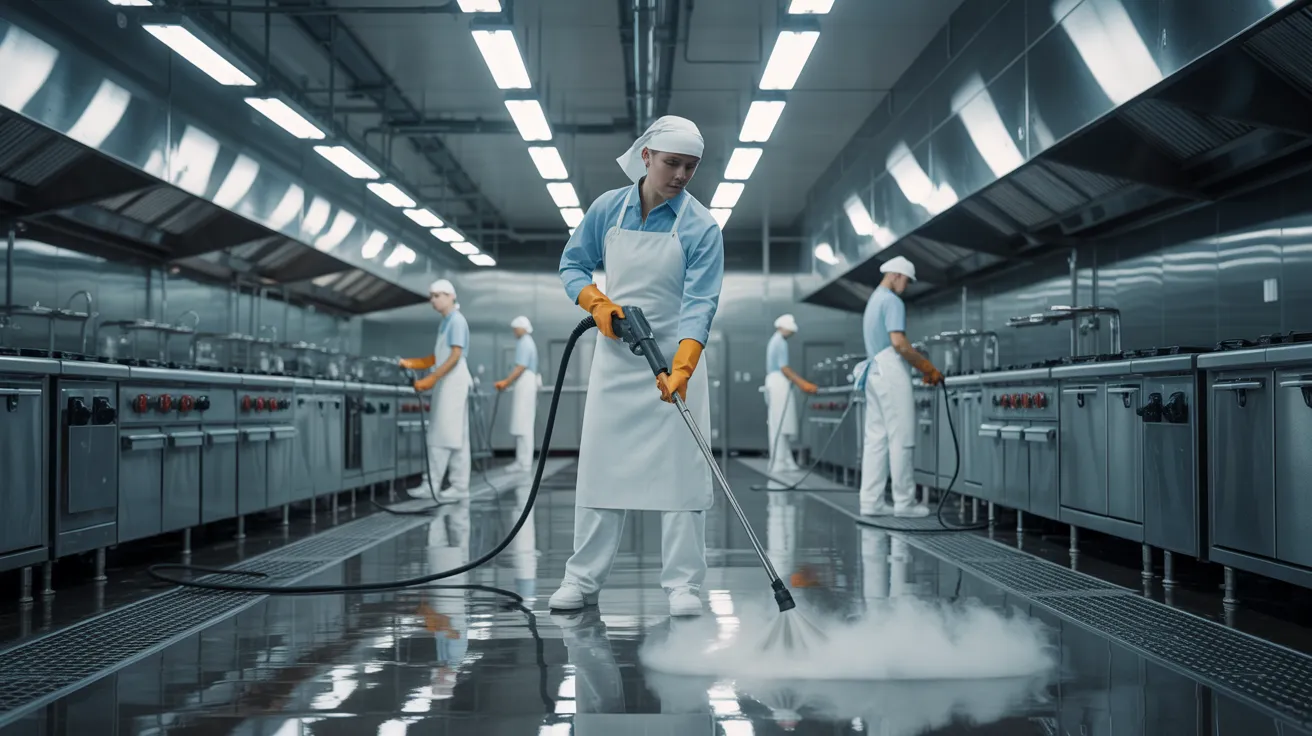
Food safety and commercial cleaning experts in Brampton assist you in maintaining dining venues, commissaries, bakeries, warehouses, and mobile food operations to code. They disinfect high-touch points, food-contact surfaces, equipment, floors, drains, restrooms, and prep areas using certified sanitizers, proper dilution, and documented exposure durations.
Important Highlights
- Brampton's food safety cleaning specialists maintain restaurants, grocery departments, commissaries, warehouses, bakeries, schools, mobile vendors, and allergen-sensitive operations.
- Compartmentalized approaches sanitize frequently contacted areas, food-contact equipment, kitchens, floors, drains, restrooms, and storage areas for eliminating cross-contamination.
- Checking of approved sanitizer dilution, suitability, and exposure duration is performed by certified specialists, with finalization recorded using samples, inspections, and correction logs.
- Sanitation timelines need to adhere to hazard, production rate, switches, releases, and regulations, with daily, regular, and periodic operations assigned by zone.
- Vendors must possess hazard analysis knowledge, public-health understanding, WHMIS preparation, coverage, references, colour-coded tools, and inspection-ready maintenance documentation.
Brampton Venues That Need Food Safety Cleaning: Which Ones?
Brampton venues that deal with, maintain, prepare, package, or provide food require hygiene cleaning. Implement it if your facility is falls under public health inspections, food codes, or HACCP requirements. The rule covers restaurants, cafeterias, commissaries, grocery food departments, butcher shops, seafood counters, convenience stores, and institutional kitchens.
You'll furthermore need adherent sanitation standards in supply facilities, manufacturing operations, cold storage warehouses, bakeries, school food programs, reception halls, and delivery services. Portable business models matter as well, like catering trucks, festival vendors, and pop-up food booths. When your employees process ingredients, portion ready-to-eat items, reheat products, or store allergens, your venue requires documented cleaning protocols. In Brampton, hygiene remains necessary; it represents legal, operational, and consumer protection compliance.
What Do Brampton Cleaning Experts Clean?
You require experienced cleaning professionals who sanitize frequently touched areas, kitchen spaces, floor areas, and bathrooms to ensure compliance with food safety and health standards. These areas are targeted because they carry the greatest contamination risk, falling hazards, and health code violations.
Understanding their cleaning procedures allows you to confirm your facility's cleaning meets operational demands and regulatory compliance.
Sterilizing High-Touch Points
Expert Brampton facility managers appreciate that high-touch surfaces demand sterilization since these areas hold harmful organisms and food particles. You need a formal plan for sterilizing frequently touched items like handles, plates, switches, railings, equipment controls, payment terminals, and fridge pulls. Implementing surface identification mapping, specialists determine every high-traffic surface and assign cleaning intervals
confirm that sterilization was adequate
Food Prep Areas, Flooring, and Sanitary Facilities
Brampton cleaning professionals will handle kitchens, floors, and restrooms since each space presents separate food safety concerns, slip-and-fall, and community health challenges. In industrial kitchens, you need degreasing on cook lines, equipment exteriors, drains, prep surfaces, and splash zones to minimize contamination and pest pressure.
Floor care that is documented should also be anticipated. Technicians scrub and extract buildup from grout, tile, and vinyl flooring, then apply appropriate drying controls so you can reduce slip incidents and meet regulatory standards. They also handle entry points where dampness and dirt enter the building.
Restroom sanitation requires disinfecting touchpoints, fixtures, partitions, dispensers, and waste containers, replacing items and managing smells. They also service restaurant moprooms, where chemical storage, sink hygiene, and drainage conditions can affect sanitation compliance and staff safety daily.
The Importance of Food Safety Cleaning in Brampton
Brampton facilities require proper hygiene standards to fulfill health code requirements and pass inspections. You also reduce cross-contamination by cleaning and sanitizing food-contact surfaces, equipment, and high-touch areas correctly. Most importantly, you safeguard public health by lowering the risk of foodborne illness in your facility.
Sanitary Standards Adherence
Brampton food businesses must comply with stringent health requirements, so cleaning procedures is key to fulfilling health codes, defending customers, and preventing penalties. You must maintain clean food preparation areas, written maintenance records, correct sanitizer application, and traceable training practices that correspond to municipal and provincial inspection expectations.
Should your cleaning standards decline, you risk violations, corrective orders, brand damage, and possible interruption to service during subsequent audits or enforcement reviews.
Cross-Contamination Prevention
Maintaining health code standards copyrights on your power to stop cross-contamination during daily food handling and cleaning. You need to partition uncooked items from finished dishes, sterilize work zones between assignments, and position cleaning agents away from food surfaces. Clear procedures reduce transfer risks and support consistent compliance during inspections.
You should establish allergen separation to keep priority allergens from contacting common work areas, storage bins, or tools. Use dedicated cutting boards, color-coded tools, and strict utensil labeling so employees avoid combining products throughout cooking or serving. Require handwashing after handling raw meat, seafood, eggs, or allergen-containing products. Replace wiping cloths regularly, and check disinfectant potency using test kits. When you train staff to follow these controls each work period, you create a cleaner, safer operation that meets Brampton's food safety expectations consistently.
Community Health Protection
Should food safety cleaning collapse, you don't simply risk a failed inspection—you expand the odds of contamination-related sickness impacting customers, staff, and the wider Brampton community. You also undermine your responsibility in safeguarding community wellness, especially in busy food facilities where contamination can spread quickly through surfaces, equipment, and touchpoints.
You require cleaning protocols that eliminate soils, sanitize effectively, and validate outcomes. This requires following exposure durations, using authorized sanitizers, documenting procedures, and coaching employees to meet regulatory requirements. These measures prevent illness spread by minimizing pathogens before contaminating food or hands. Throughout Brampton, strong cleaning protects vulnerable communities, minimizes disease potential, and demonstrates your diligence. When you follow proper protocols, you go beyond requirements—you mitigate risk and facilitate secure food handling region-wide.
Why Is Cleaning Essential for Food Safety Compliance?
Thorough cleaning protocols promote food safety compliance by minimizing contamination hazards, managing pathogen expansion, and maintaining your facility's adherence to sanitation requirements under HACCP-based programs and public health regulations. You ensure that food-contact surfaces are visibly clean and microbiologically controlled, enabling documented preventive controls and inspection readiness.
Comprehensive cleaning moreover enhances allergen control by removing residues that can provoke undeclared allergen exposure. When you combine approved sanitation protocols with standards training, your staff can implement established protocols, apply approved chemicals correctly, complete records correctly, and respond to discrepancies before they escalate. Regular cleaning enables traceability, verifies corrective actions, and proves due diligence in audits. Furthermore, it aids you safeguard quality assurance, preserve operational compliance, and decrease the chances of compliance actions, product recalls, complaints, and unnecessary health dangers.
Finding When to Schedule Commercial Cleaning
maintenance activities.
Seasonal comprehensive cleaning needs to be scheduled for shutdowns, weather-related soil buildup, or pest-pressure periods
How Do You Choose Brampton Cleaning Experts?
Start by screening providers against food-safe sanitation requirements, not price alone. You should verify that each company understands CFIA, public health, and HACCP-aligned expectations relevant to your facility. Ask for proof of insurance, WHMIS compliance, documented staff training, and supervision practices. Review whether technicians understand contamination prevention, chemical handling, and traceable sanitation records.
You must also evaluate operational reliability and oversight. Seek references from food facilities in Brampton, then assess response speed, corrective-action procedures, and communication quality. Ensure the company enables supplier checks and can provide inspection-ready documentation when authorities or third parties demand verification. Verify equipment is maintained, color-coded items are deployed correctly, and site-specific hazards are understood. A reputable service protects compliance, product integrity, and your market standing.
Which elements are part of a Food Safety Cleaning Plan?
Document a plan that outlines every sanitation task, standard, and responsibility before production begins. You should record cleaning schedules, approved products, ratios, contact periods, tools, and validation approaches for each zone, surface, and piece of equipment. Remember to add pre-operational inspections, corrective actions, and employee training requirements.
Your strategy should also address cross-contamination controls, waste handling, pest-prevention measures, and documented schedules for rest areas, drains, flooring, and food-contact surfaces. Describe how you'll separate raw and ready-to-eat processes, facilitate ingredient tracking, and ensure accurate allergen labeling through validated cleaning between product changes. You should assign accountability, maintain signed records, and assess results against regulatory standards, HACCP controls, and customer requirements. When gaps appear, update procedures essential information immediately and instruct staff.
Popular Asked Questions
Do cleaning services operate during nighttime hours at Brampton properties?
Yes, you can contract sanitation providers to handle overnight shifts in Brampton facilities. You'll manage overnight sanitation around production schedules, security controls, and staffing levels. Providers generally establish overnight procedures to prevent disruption, copyright compliance, and log completed work. You should verify response times, oversight, lockout protocols, and disposal methods before service starts.
Can Brampton cleaning experts manage hazardous incidents?
Yes, you can find Brampton cleaning experts to offer emergency spill response services. They handle hazard containment, evaluate dangers, contain contamination, and begin swift cleanup to reduce exposure and operational disruption. You should verify arrival timeframes, training certifications, safety procedures, and disposal procedures. If your facility must comply with industry standards, choose a provider that records events, follows compliant sanitation standards, and enables compliance verification.
Are environmentally safe disinfectants suitable for surfaces contacting food?
In essence, eco-friendly disinfectants are safe for food preparation areas provided you buy disinfectants approved for food contact that comply with regulatory standards. Validate exposure duration, dilution ratios, and rinse protocols in advance of use. Plant-derived products reduce chemical burden, although you require proof of efficacy against harmful bacteria. To ensure surfaces without residue, follow manufacturer instructions exactly and confirm the disinfecting agent complies with food sanitation requirements.
Will cleaning plans adapt to seasonal variations?
Yes, you can customize sanitation programs for seasonal shifts. You should adjust frequencies, staffing, chemicals, and validation steps to match operational cycles while upholding regulatory requirements. You'll decrease production downtime by planning cleaning around changeovers, peak seasons, and equipment use patterns. You should additionally update written procedures, training, and monitoring protocols to capture temporary risks, new allergens, or increased soil loads. Ongoing evaluations keep your plan effective.
Do professional cleaning services educate staff on sanitation best practices?
Certainly, professional cleaning experts coach your employees on hygiene protocols. You secure staff training on proper chemical use, processing times, contamination control, equipment disassembly, and documentation procedures. They generally coordinate coaching with HACCP, GMP, and CFIA or regional health bodies requirements. Many also run health assessments to verify compliance, identify gaps, and reinforce corrective actions. This enables you to maintain consistent procedures, pass inspections, and reduce food safety risks every day.
Closing Remarks
By collaborating with Brampton food safety and commercial cleaning professionals, you aren't simply tidying—you maintain your facility inspection-ready and your standards up to code. From kitchens to processing floors, every clean surface and organized space reduces pest risk and prevents costly issues. By scheduling cleanings at appropriate intervals and adhering to a systematic cleaning protocol, you protect your team, clients, and your credibility. In a heavily controlled environment, clean spaces must be prioritized—they're essential to successful operations.